
Losing Touch - a Man without his body. Jonathan Cole, 2016, Oxford University Press This book is about understanding the experience of living with the loss of touch – cutaneous touch and movement/position sense (proprioception). ‘Touch Ian, stroke him, or put a heavy weight in his hand and he cannot feel it. For all the… Continue reading Book review: Losing Touch
Author: intouchdigitaltouch
What is the role of e-textiles and smart textiles for touch based communication?
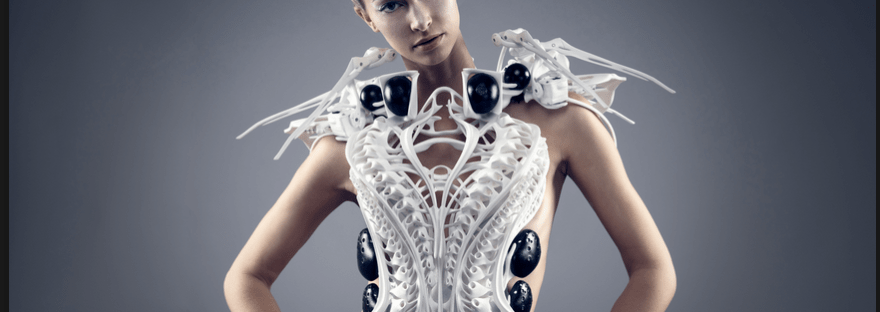
Smart textiles or e-textiles are ordinary materials with a range of electronics, conductive materials and sensors woven into the fabric, and that respond to movement and/or touch. Smart textiles are materials that have ‘sensing and actuating properties’. This means they can both ‘sense’ and ‘react’ to external factors in the environment, e.g. mechanical, chemical, thermal,… Continue reading What is the role of e-textiles and smart textiles for touch based communication?
A renaissance of touch in the museum?
Touch was a significant feature of visiting museums in the past. In the late seventeenth and eighteenth centuries visitors to the Ashmolean (Oxford, UK) and the British Museum (London, UK) were allowed to handle, rub, shake and even taste objects on display. Restrictions on how objects could be handled and by whom emerged over time… Continue reading A renaissance of touch in the museum?
Touch it – Want it? Using Touch to Sell
Touch is key to retail and consumerism. The role of touch in the success of the mid-nineteenth century phenomenon of the department store is well documented by Classen in The Deepest Sense (2012), her seminal cultural history of touch. She writes of how the department store brought the goods previously out of sight and touch… Continue reading Touch it – Want it? Using Touch to Sell

Are we heading toward touch deprivation and sensory extinction?
The visual dominance within the digital landscape has been associated with the stifling of other senses, and is associated with feelings of detachment and alienation. Some have argued that the digital is now in the throws of a ‘poly-sensory comeback’ (Bacci and Melcher, 2013), a sensory revolution in which touch is the vanguard. Digital touch… Continue reading Are we heading toward touch deprivation and sensory extinction?
Will the rapid expansion of digital touch reconfigure touch and the tactile like optical technologies transformed sight and the visual?
We are on the brink of a sensory revolution: The social sciences and humanities are marked by growing interest in the value of the human senses and the desire to move beyond a vision-centric approach to re-evaluate the roles of other senses (see Howes and Classen, 2014). The emerging field of digital sensory communication, the… Continue reading Will the rapid expansion of digital touch reconfigure touch and the tactile like optical technologies transformed sight and the visual?
What we are reading
Research on the senses and the body is situated across a number of scholarly traditions. We are reading books and papers from across a range of disciplines including sociology, anthropology of the senses, the arts and socio-linguistics, philosophy, psychology, psycho-physics and neuroscience. These disciplines have, generally, neglected touch, in particular digital touch. There is a… Continue reading What we are reading
 IN-TOUCH: DIGITAL TOUCH COMMUNICATION